Queer Places:
Yale University (Ivy League), 38 Hillhouse Ave, New Haven, CT 06520
Columbia University (Ivy League), 116th St and Broadway, New York, NY 10027
Center Cemetery, 59 Old Colony Rd, Norfolk, CT 06058, United States
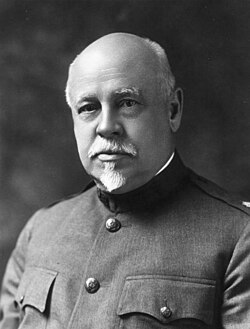 Dr. William Henry Welch (April 8, 1850 – April 30, 1934) was an influential American physician, pathologist, bacteriologist, and medical educator. Often referred to as
the "Dean of American Medicine," he transformed American medical education by bringing European laboratory standards and rigorous scientific research to the United
States.
Dr. William Henry Welch (April 8, 1850 – April 30, 1934) was an influential American physician, pathologist, bacteriologist, and medical educator. Often referred to as
the "Dean of American Medicine," he transformed American medical education by bringing European laboratory standards and rigorous scientific research to the United
States.
Welch was born in Norfolk, Connecticut, into a prominent family of physicians. Initially reluctant to follow the family profession, he attended Yale University
(graduating in 1870) with a primary interest in classics and Greek. He eventually turned toward medicine, earning his M.D. from the Columbia University College of
Physicians and Surgeons in 1875.
Between 1876 and 1878, Welch studied in Germany under leading path-breakers like Julius Cohnheim. Exposed to modern European pathology and microbiology techniques, he
returned to New York to set up the first pathological laboratory in the United States at Bellevue Hospital Medical College.
In 1884, Welch was recruited as the first professor of pathology at the newly established Johns Hopkins University in Baltimore. Alongside William Osler, William
Stewart Halsted, and Howard Atwood Kelly, Welch became one of the "Big Four" founding professors of Johns Hopkins Hospital.
When the Johns Hopkins School of Medicine opened in 1893, Welch served as its founding dean. He instituted strict prerequisites, including a bachelor's degree and
science qualifications, raising the bar for U.S. medical training.
He discovered Clostridium perfringens (formerly known as Bacillus welchii), the bacterium responsible for gas gangrene.
In 1916, he founded the Johns Hopkins School of Hygiene and Public Health—the first institution of its kind in the nation—and served as its director.
In 1926, he established the Johns Hopkins Institute of the History of Medicine and oversaw the opening of the William H. Welch Medical Library.
Welch died of cancer on April 30, 1934, at Johns Hopkins Hospital at the age of 84.
In modern LGBTQ medical history scholarship, William H. Welch is frequently identified alongside other prominent, unmarried medical figures of his era.
Welch remained a lifelong bachelor. Throughout his life, he was notorious for keeping his personal life almost entirely detached from his public duty, maintaining an
intensely private domestic world.
In 20th-century history of science and medicine—such as studies by medical historians on early American public health leaders—Welch is regularly cited in discussions
regarding unmarried or closeted gay figures in early medicine.
Unlike some contemporaries (e.g., medical figures whose long-term romantic or same-sex domestic partnerships were explicitly documented), Welch's personal
correspondence and archival records focus heavily on administrative and institutional work. Historians note that elite men of his era lived under intense social
scrutiny, where explicit documentation of non-normative sexuality was deliberately destroyed, sanitized by biographers, or kept deeply hidden.
Scholars who document the history of same-sex attraction and non-conforming lives in medicine categorize Welch as a significant late 19th- and early 20th-century
figure whose singlehood and social network fit into broader historical patterns of closeted or bachelor scientific figures.
Welch played a pivotal role in shaping Johns Hopkins, an institution that later became central to early gender-affirming research and clinical care when it opened the
Gender Identity Clinic in the 1960s.
References:
Other references:
- Alan Mason Chesney Medical Archives (Johns Hopkins Medicine), Collection: William H. Welch Collection (1873–1934)
- Flexner, Simon and James Thomas Flexner. William Henry Welch and the Heroic Age of American Medicine. New York: Viking Press, 1941
- Welch, William Henry. Papers and Addresses by William Henry Welch. 3 volumes. Baltimore: Johns Hopkins Press, 1920
- Hruban, Ralph H. and Will Linder. "William Henry Welch." In A Scientific Revolution: Ten Men and Women Who Reinvented American Medicine, pp. 41–61. Pegasus Books, 2022
- Barry, John M. The Great Influenza: The Epic Story of the Deadliest Plague in History. New York: Penguin Books, 2004
- Fee, Elizabeth. Disease and Discovery: History of the Johns Hopkins School of Hygiene and Public Health, 1916–1939. Baltimore: Johns Hopkins University Press, 1987
- Hansen, Bert. Queer History and the Medical Profession. Journal of the History of Medicine and Allied Sciences
- Fordham University Internet History Sourcebooks Project. Bibliographical Guide to Lesbian and Gay History (Ed. Paul Halsall)
Support this project
This website is a passion project researched, developed, and funded entirely by me. If you find the content valuable and would like to help support the ongoing research and hosting costs, any contribution is deeply appreciated.
Thank you for keeping this independent resource alive!
My books on Amazon: Elisa Rolle's books
BACK TO HOME PAGE
